
Left
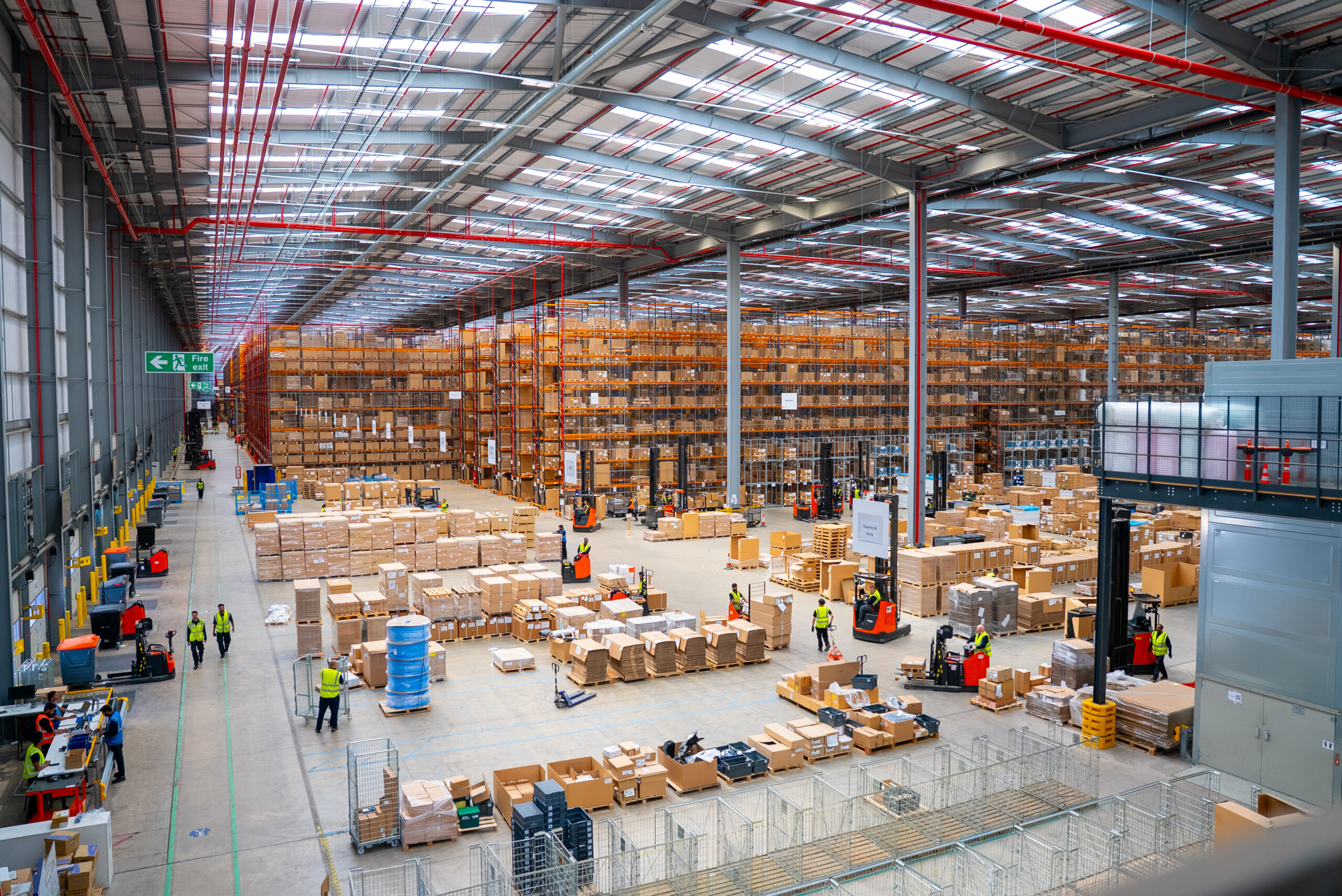
The resilience of agile warehousing for supply chain management
Learn how agile warehousing has become essential for maintaining service quality while responding efficiently to disruption and fluctuating demand.
Supply chains are operating in a far more volatile environment than many were originally designed to support. At a recent panel discussion hosted by the British Chamber of Commerce in Japan (BCCJ) in Tokyo, industry leaders, including Carl Williams, Managing Director for Asia Pacific at Unipart, highlighted that volatility has now become a permanent operating condition, requiring organisations to rethink risk, resilience, and supply chain design at a strategic level. This shift reinforces the importance of the resilience of agile warehousing in modern supply chains.
Against this backdrop of structural uncertainty, supply chains are being reshaped by demand volatility, rising customer expectations, and persistent disruption from skills shortages, transport delays, geopolitical instability, and extreme weather events. Looking ahead, AI-driven logistics and emerging concepts such as Sixth-Party Logistics (6PL) are expected to further increase the importance of agile, data-driven warehousing operations, and strengthen the resilience of agile warehousing as a core capability.
In this environment, warehouses are playing a far broader role than simply storing stock. They are central to maintaining product availability, meeting delivery commitments, and keeping operations running smoothly when conditions change, highlighting the growing resilience of agile warehousing in practice.
Agile warehousing enables organisations to respond effectively to disruption by combining technology, operational design, and scalable processes that maintain efficiency under changing conditions. This operational flexibility underpins the resilience of agile warehousing in modern supply chains.
Understanding agile warehousing
Traditional warehousing was built for stability, with predictable demand, consistent inventory levels, and steady product flow. Today, organisations must respond to far greater uncertainty using data-led decision-making, predictive analytics, and digital technologies that improve visibility and operational agility.
As a result, warehouses have evolved from storage facilities into strategic hubs that support end-to-end supply chain performance. They enable organisations to flex capacity across e-commerce, click and collect, and store replenishment while maintaining service levels as demand changes.
Agile warehousing has therefore become essential for maintaining service quality while responding efficiently to disruption and fluctuating demand.
Rising customer expectations and workforce challenges
As a key link between supply and demand, disruption within warehouses can quickly ripple across the wider supply chain. At the same time, organisations continue to face skills shortages in digitally enabled supply chain roles, particularly in planning, data analytics, and AI-enabled decision-making. Research shows that 57% of businesses report a technical AI skills gap, highlighting the challenge of securing the capabilities needed to support increasingly digital supply chain operations.
Customer expectations are rising in parallel. Research shows that 57% of consumers now expect their orders to arrive within two days, placing additional pressure on warehousing and fulfilment operations to improve speed, accuracy, and responsiveness.
Warehouses have evolved from static cost centres into dynamic, value-generating nodes that increasingly define the customer experience. They sit at the heart of end-to-end supply chain performance, enabling organisations to support omnichannel fulfilment models and flex capacity between e-commerce, click and collect, and store replenishment as demand changes.
Navigating an increasingly uncertain operating environment
Geopolitical instability, trade uncertainty, and ongoing global conflicts continue to disrupt international logistics networks, with tensions in the Middle East contributing to volatility in global energy markets and upward pressure on fuel prices through disruptions to key shipping routes such as the Strait of Hormuz (IEA, 2026). Extreme weather events are also becoming more frequent and severe, affecting transport infrastructure and increasing operational risk. Collectively, these pressures are driving greater supply chain instability and increasing cost-to-serve through higher transport costs, additional safety stock requirements, and reduced operational efficiency.
Cyber threats are creating further operational risks as supply chains become increasingly digital. ENISA’s 2025 Threat Landscape Report ranks transport as the third-most-targeted sector in the EU, with growing concerns around supply-chain attacks involving third-party providers and interconnected operational networks.
Organisations with agile supply chain partnerships are often better positioned to respond to disruption through rapid reconfiguration, real-time visibility, and collaborative planning.
In practice, agility translates directly into improved OTIF (on-time, in-full) performance, reduced order cycle times, more efficient inventory turns, and higher inventory accuracy, enabling warehouses to respond more effectively to disruption while maintaining service performance.
Together, these capabilities demonstrate how operational flexibility, digital visibility, and strong partnerships underpin long-term supply chain resilience.
What makes agile warehousing effective
Agile warehousing relies on several interconnected capabilities that improve operational resilience, scalability, and responsiveness.
1. Real-time inventory visibility
Real-time inventory visibility enables faster and more informed decision-making across warehouse operations. By using warehouse management systems (WMS), such as Unipart’s Unipart Digital Enterprise System (UDES), organisations can monitor stock movement accurately and gain live insight into inventory levels, locations, and activity, strengthening the resilience of agile warehousing.
This supports:
- Improved stock accuracy through real-time tracking and system-guided workflows
- Faster response to changing demand using live operational data
- Better space utilisation through improved visibility of stock locations and movement
- Smarter replenishment decisions based on current inventory information

Explore how Unipart helped a high-growth e-commerce fashion retailer support 30% year-on-year growth.
2. Flexible warehouse layouts
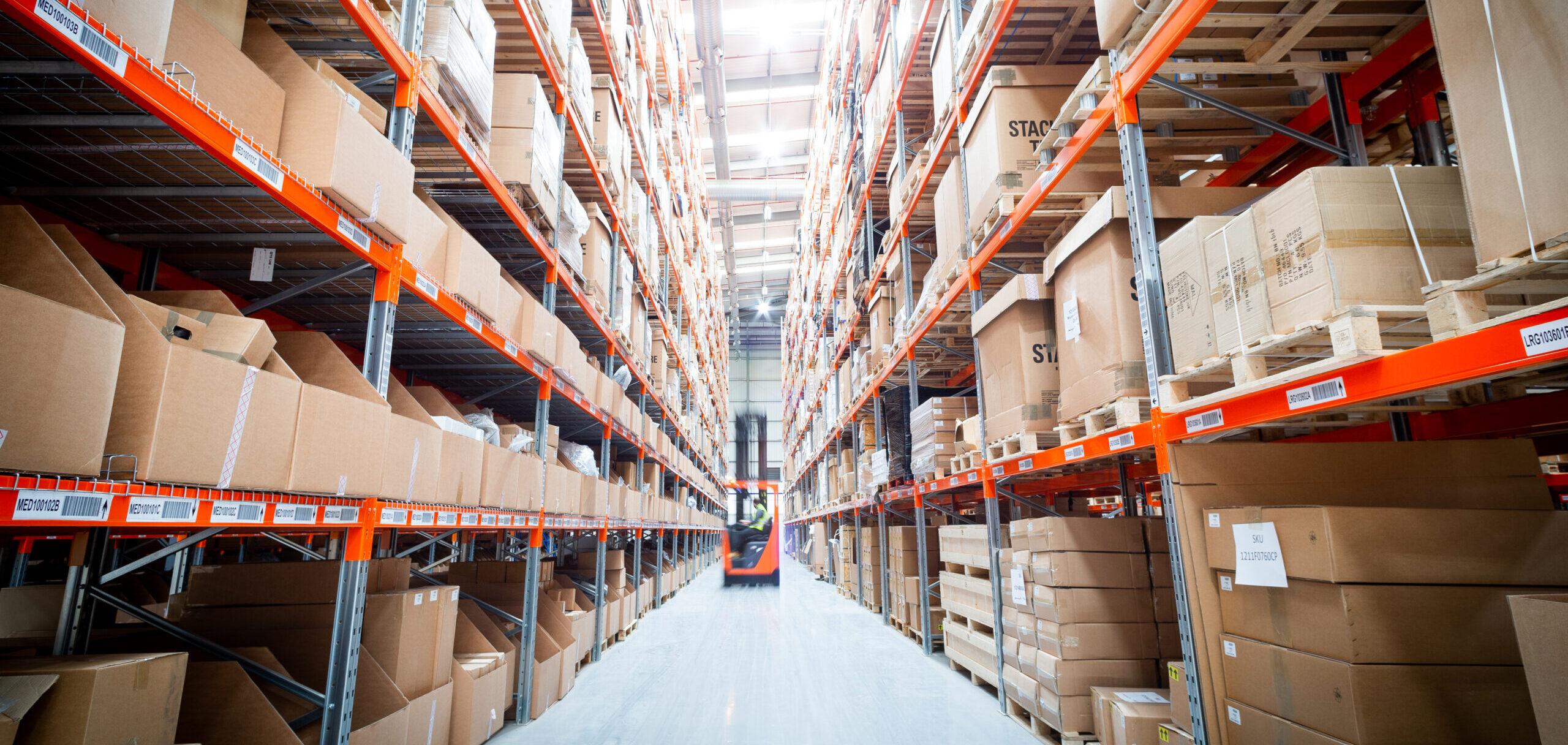
Agile warehouses are designed to adapt as demand changes. Modular storage systems and dynamic slotting allow space to be reconfigured for different product flows, helping reduce bottlenecks and maintain efficient operations during demand spikes. Space can also be reassigned quickly between storage, picking, and packing as demand changes.
Adaptable layouts improve space efficiency and support changing product mixes and seasonal demand. By enabling rapid reconfiguration, warehouses can sustain throughput and maintain fulfilment performance even in unpredictable conditions.
Explore how Unipart helped a fast-growing EV manufacturer entering the South Korean market rapidly scale its warehouse operation.
3. Scalable labour management
The importance of workforce flexibility is increasing as warehouse roles continue to evolve. According to the World Economic Forum’s Human-Machine Collaboration Framework, three in four industrial jobs are expected to evolve over the next decade, with around 40% of future industrial skills classified as new or emerging.
Demand fluctuations often require rapid adjustments in staffing. Agile warehouse operations use cross-training and labour management strategies to ensure employees can move flexibly between operational areas as workloads shift. This approach helps maintain workforce capacity during peak periods while reducing delays caused by sudden increases in volume.
4. Automation and robotics
Automation reduces reliance on manual processes and improves consistency across warehouse operations. Technologies such as autonomous mobile robots (AMRs), automated storage systems, and conveyor networks help maintain throughput during periods of labour pressure or increased demand.
By supporting faster and more reliable material flow, automation strengthens operational resilience and helps warehouses sustain productivity during changing conditions. These technologies also complement warehouse management systems by improving task execution, reducing delays, and creating more predictable operational performance.
Underpinned by the principles of The Unipart Way, Unipart partners with customers to deploy automation technologies such as AMRs where they strengthen operational resilience and deliver the greatest value.
5. Multi-location distribution networks
Distributing inventory across multiple locations reduces dependency on a single warehouse and increases flexibility within fulfilment operations. If disruption affects one site, orders can be rerouted through alternative fulfilment points, helping maintain continuity and reduce operational risk. It also improves responsiveness by positioning stock closer to customers and improving regional fulfilment.

Explore how Unipart helped Selco Builders Warehouse build a resilient nationwide distribution network.
6. Data analytics and forecasting
Predictive analytics help organisations identify potential disruption earlier, enabling a shift from reactive to proactive decision-making. By combining historical data with real-time operational insights, warehouses can detect emerging trends, forecast demand more accurately, and move operations from a defensive posture (reacting to stockouts) to an offensive one (pre-positioning inventory based on predictive regional demand).
This improves decisions around stock levels, labour allocation, and distribution planning while providing earlier visibility of potential bottlenecks. By improving planning accuracy, data analytics strengthens resilience and supports more stable warehouse performance.
How can Unipart help?
Building agile warehousing capabilities requires the right combination of operational expertise, technology, and continuous improvement. Unipart helps organisations strengthen the resilience of agile warehousing by improving visibility, increasing capacity, and enhancing responsiveness to disruption.