Get in touch
Ready to build a resilient, multi-path supply chain? Contact our logistics experts today to optimise your operations.

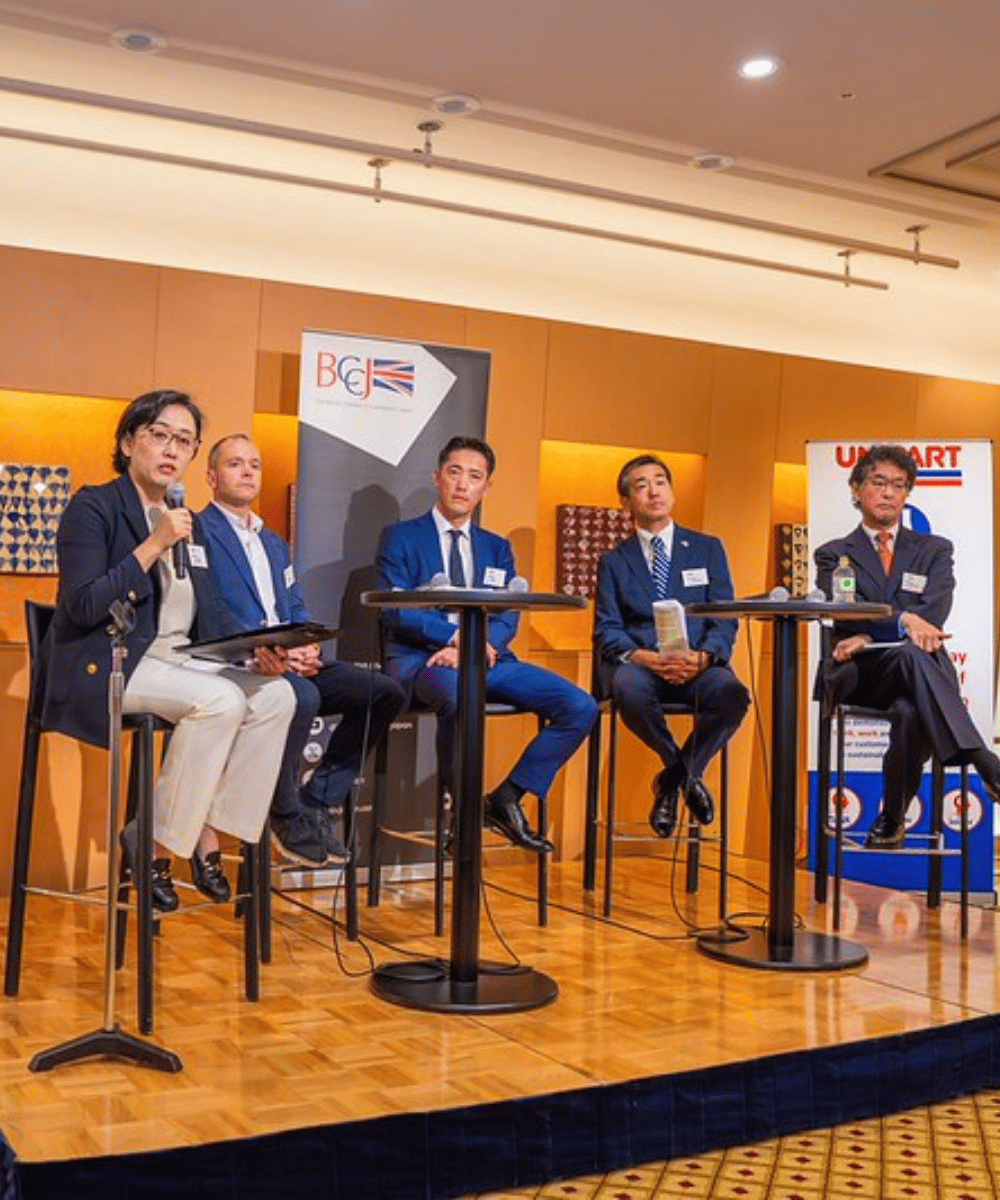
At a recent panel discussion hosted by the British Chamber of Commerce in Japan (BCCJ) in Tokyo, top industry specialists gathered to map out the future of global supply networks.
The overarching consensus of the session was that volatility has become a permanent core operating condition. Leaders from across the energy, logistics, and automotive sectors highlighted how geopolitical fragmentation, trade tariffs, and industrial shifts are forcing an architectural redesign of global commerce, moving supply chain resilience from an operational detail straight to the highest levels of corporate governance.
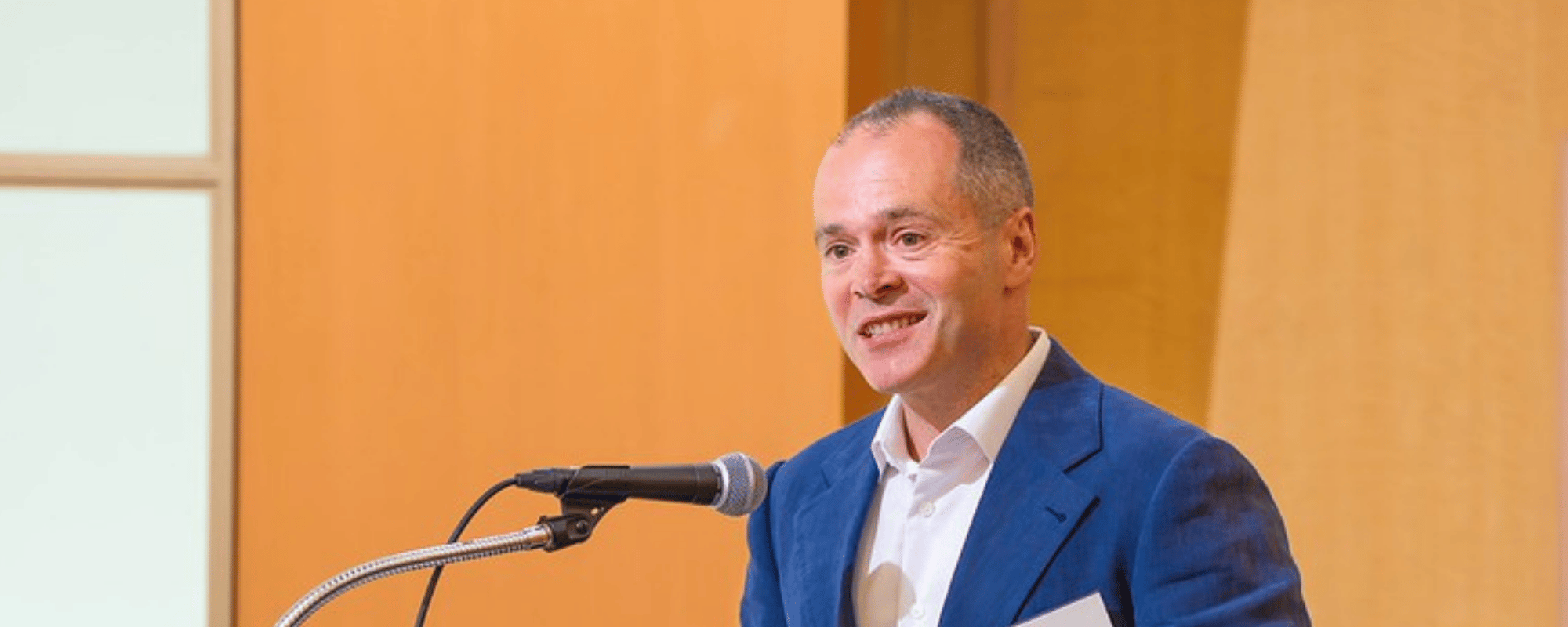
Representing Unipart on the panel was Carl Williams, Managing Director for Asia Pacific. Carl challenged the audience to rethink legacy approaches to risk, pushing past rigid compliance to advocate for top-down governance, stronger ecosystem relationships, and absolute decision speed.
A foundational theme of Carl’s analysis was how heavily supply chain design is now being dictated by outside political and geopolitical pressures. When unpacking the drivers behind the shift away from old, purely cost-driven models, Carl highlighted how the politicisation of the supply chain removes optionality and fundamentally alters sourcing strategies.
As an example of where companies have historically wielded some choice, Carl pointed to regional diversification strategies like “China-plus-one.” Sharing an observation from Unipart’s own regional footprint, he illustrated how political acceptability is overriding pure economics on the ground: “For the last 10, 15 years, it’s been unattractive for some companies to have your supply chain purely coming out of China. So there’s been this massive China-plus-one move with Vietnam as a beneficiary, for example. I know from personal experience that it’s challenging to get warehousing space in northern Vietnam now because everybody’s relocated their warehouses there because that label is deemed more politically acceptable in certain areas than China’s.”
However, Carl noted that this political influence isn’t always something companies can plan around dynamically. Sudden geopolitical disruptions force a baseline restructuring that companies must accept as a standard condition. “The other part where there’s less optionality is events such as disruptions to shipping, blockages, etc. So, it’s forcing that change to the supply chains that may cause more inventory, longer lead times, etc.”
These disruptions carry immediate financial penalties. Carl observed that the imposition of global tariffs and maritime bottlenecks has caused freight rates for a 40-foot container from Asia to the US to surge from $2,500 to upwards of $5,000, while driving air freight prices to record highs. This unpredictability forces a costly, defensive move of pushing heavy inventory further down the supply chain, which severely strains corporate cash flow.
As these politically driven disruptions and regulatory interventions compound, they expose supply chains to highly sophisticated secondary threats, particularly in the digital realm. As networks grow increasingly digital, cyber warfare and systemic disruptions have transformed from IT headaches into existential corporate crises. This reality requires a radical move away from traditional governance structures that treat business continuity planning (BCP) as a rigid, bureaucratic compliance exercise.
Describing a passive routine that many leaders will instantly recognise, Carl reflected on the need to overhaul outdated security protocols: “An email is sent and it would be titled: ‘It’s time to update the business continuity plan.’ Everybody downloads a Word document from the email and then is asked to grade the likelihood of a pandemic, disruption, war, cyber, etc. Most people do it as quickly as possible, save it, send it, done. And that’s the plan, including cyber, for a year. If there are any companies that are still doing it that way, you’re at risk. Quite obviously.”
This passivity leaves organisations profoundly vulnerable. Carl warned that the threat is real and constant, citing major British enterprises that have recently suffered severe operational disruptions due to cyberattacks. When a crisis strikes, standard BCP frameworks focus almost exclusively on retroactively diagnosing the damage and mapping out a slow path back to normal operations.
Carl argued that true resilience requires leaders to completely flip the baseline assumption from post-incident recovery to continuous execution under fire. “Rather than the old way of looking at a cyber policy or business continuity plan, which is ‘once we’ve been hit, how do we get back up?’, the best practice for creating the new cyber plan is to actually ask: how can our business continue despite being continually attacked?”
Operating continuously under fire, however, is impossible if a company only looks within its own corporate boundaries. Because modern digital systems are inextricably bound together via an immense web of APIs, a vulnerability anywhere in the network threatens the primary enterprise.
A major pain point highlighted by the panel was that serious operational incidents frequently occur at distant transaction points along the supply chain, such as tier-3, tier-4, and tier-5 vendors.
When asked how large organisations can protect an entire network when the weakest link sits outside their corporate perimeter, Carl emphasised that enterprises must abandon transactional vendor churn in favour of long-term collaborative stability. The historical habit of constantly retendering contracts to chase short-term price reductions is actively incompatible with modern security needs.
“When you get down to lower tiers, there’s a lot of RFQs, tendering for pricing, ‘move away from that supplier because we need a 2% price reduction.’ That’s starting to change a little bit because of that trust requirement with the cyber element. If there is less chopping and changing in the tiers, that aids with resilience.”
True risk insulation requires moving away from isolationist policies and actively bringing suppliers into the strategic fold. “The amount of APIs that you have from one company to another is enormous, and increases risk with each integration,” Carl explained. “You have to set out your policy, do it continuously, and do it with your supplier base, your vendor base, and any company you work with, because doing it in isolation won’t solve the actual challenge itself.”
Forging these deeply integrated, trusted vendor relationships naturally requires a shared digital architecture. Yet, while the panel extensively debated futuristic, capital-intensive technologies, ranging from automated sorting robotics to eco-friendly maritime paints and advanced torrefied fuel pellets, Carl brought a pragmatic solution to the table.
He explained that while heavy capital investments like automated warehousing and drone deliveries are innovative, they are long-term strategies. For leaders tasked with managing the immediate, daily realities of global networks, the most impactful tool available is simple, comprehensive data visibility that drives rapid decision-making.
“Within warehouses there’s automated robots, automated picking, sorting, etc. At the other end of the supply chain organisations are testing drones for delivery – all of that making supply chains, with capital investment, more efficient. But for us running other people’s supply chains today, the most important technology is one that already exists: digital dashboards. It’s actually conveying data to the customer so quickly that decisions can be made in an instant.”
Ultimately, the ability to turn real-time data into immediate operational pivots requires a corporate culture that values agility over legacy structures. The panel concluded that surviving a fractured global landscape requires supply chain strategy to be driven directly from the top, transforming it from a historic cost centre into a core pillar of corporate governance.
Carl observed that this transition is already fundamentally altering corporate blueprints, pointing to a massive global uptick in CEOs and board members selected specifically for their operational and logistics expertise. “If you look at some data from the US recently, of the top couple thousand entities, about 40% of CEOs have supply chain experience, or new recruitments for board positions are asking for supply chain experience. As a macro trend, that’s really important.”
To lead in this new landscape, corporate leaders must build a proactive cultural bias to action, abandoning static thinking in favour of pre-planned operational agility. Rather than waiting for a crisis to break a single, fragile supply line, boards must design multi-path networks as a standard operating procedure.
As Carl concluded: “Having a number of options in what you do, pre-planned in the event of option A not working properly, is a sensible strategy for companies that will, I think, out-perform compared to others.”
At Unipart, we believe that true supply chain resilience belongs to companies that eliminate static compliance, bridge the digital gap with their vendors, and design their governance to move seamlessly through continuous uncertainty.