Get in touch
Partner with Unipart to optimise your supply chain. Contact us to discover how our warehouse solutions drive growth.

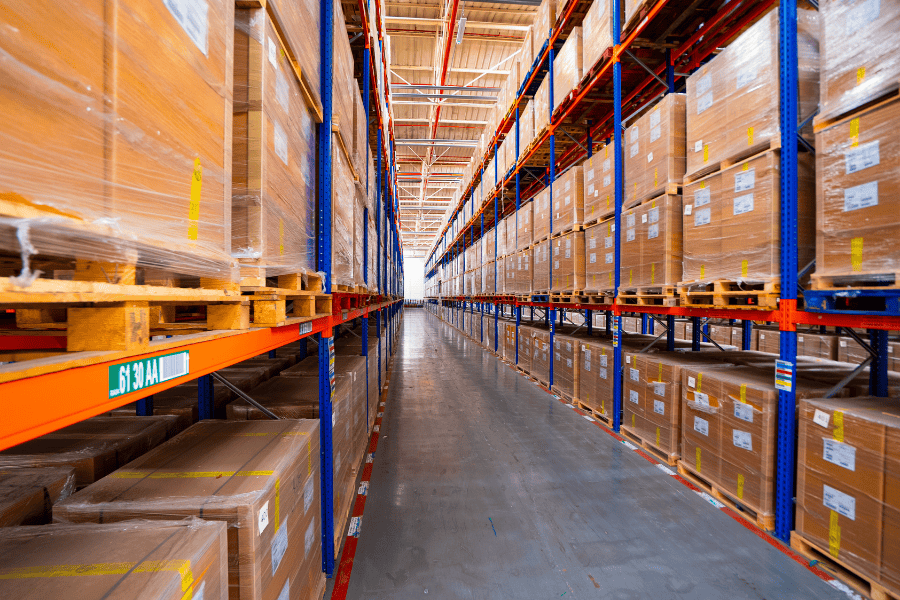
As we wrote at length in our Warehousing insight paper, Beyond the Box, the warehouse has evolved from a static storage shed into a critical part of the supply chain. Once considered a marginal element of logistics, warehousing has transformed into a pivotal stage for operational excellence.
In the UK alone, the warehousing sector is one of the fastest-growing industries, as UKWA stated in a letter to Chancellor Rachel Reeves, warehousing is currently contributing approximately £165 billion in Gross Value Added (GVA) to the economy.
This economic boost is fuelled by the vital role warehouses play in daily operations. We’re going to be exploring why warehousing is the heartbeat of successful supply chain management, focusing on its impact on lead times, customer satisfaction, and overall efficiency.
The primary function of a warehouse is to decouple the time and place of production from the time and place of consumption. In simpler terms, warehousing acts as the “shock absorber” of the supply chain. Without strategically located hubs, the last mile of delivery, which is often the most expensive and complex stage, becomes a hurdle that can erode profit margins and customer trust.
Modern warehousing is really about geographic intelligence. Research highlights that the most successful warehouses are positioned near major transport hubs, rail freight terminals, and motorway arteries to minimise transit times. By positioning inventory in these high-velocity corridors, businesses can drastically reduce lead times, transitioning from multi-day delivery windows to same-day or next-day fulfilment.
However, in a post-Brexit landscape, physical proximity is only half the battle, regulatory intelligence is the other.
With a heavy reliance on imports from regions like Asia Pacific, businesses are increasingly exploring customs bonded facilities and free trade zones. These setups allow for significant customs duty deferment, providing vital relief for cash flow while goods are held in limbo. By integrating bonded status into strategically located hubs, businesses can manage the complexities of international trade without sacrificing the speed of their domestic fulfilment.
Alongside this geographic intelligence, the traditional “Just-in-time” model has
been challenged by systemic shocks that can impact lead times. Strategic warehousing provides a buffer, allowing businesses to move toward a “Just-in-case” strategy. This ensures high responsiveness and stock availability even when global shipping routes are disrupted.
At Unipart, we are actively evolving our infrastructure to meet these dual demands of speed and fiscal efficiency. We are progressing several bonded avenues for our partners, including bonding units at our Honeybourne site, and developing a new bonded facility in the Midlands.
Our network is built on high-connectivity locations designed to strengthen every access point of your supply chain. To see how these sites can specifically optimise your distribution reach and duty management, you can download our full range of site-specific brochures.
Having warehouses in the right locations is what allows businesses to keep pace with the ‘Amazon effect,’ where customer satisfaction is now measured in hours rather than days. The warehouse serves as the final, critical checkpoint for quality and speed before a product reaches the doorstep. It is here that a business’ promise is either fulfilled or broken.
Warehousing and last-mile logistics are the definitive factors in ensuring products arrive at the right place, at the right time, and with the right quality. This ‘right’ philosophy is the bedrock of consumer trust. In business, where a single delivery error can lead to a negative viral review, a warehouse needs to operate with surgical precision.
A mismanaged facility, for example one plagued by data fragmentation, siloed communication, or manual entry errors, will act as a bottleneck in the supply chain. These inefficiencies significantly prolong the pick-to-ship cycle, leading to the delayed deliveries and incorrect orders that define a poor customer experience. Today’s customers increasingly select service providers based on perceived service quality and delivery reliability.
And, beyond speed, the warehouse is the guardian of product integrity. Advanced scanning and automated quality check stations ensure that the item leaving the dock is exactly what was ordered and in pristine condition.
This pursuit of precision is driving a significant wave of operational investment. In a bid to improve both customer satisfaction and business efficiency, warehouse automation has shifted from a long-term ambition to a near-term priority.
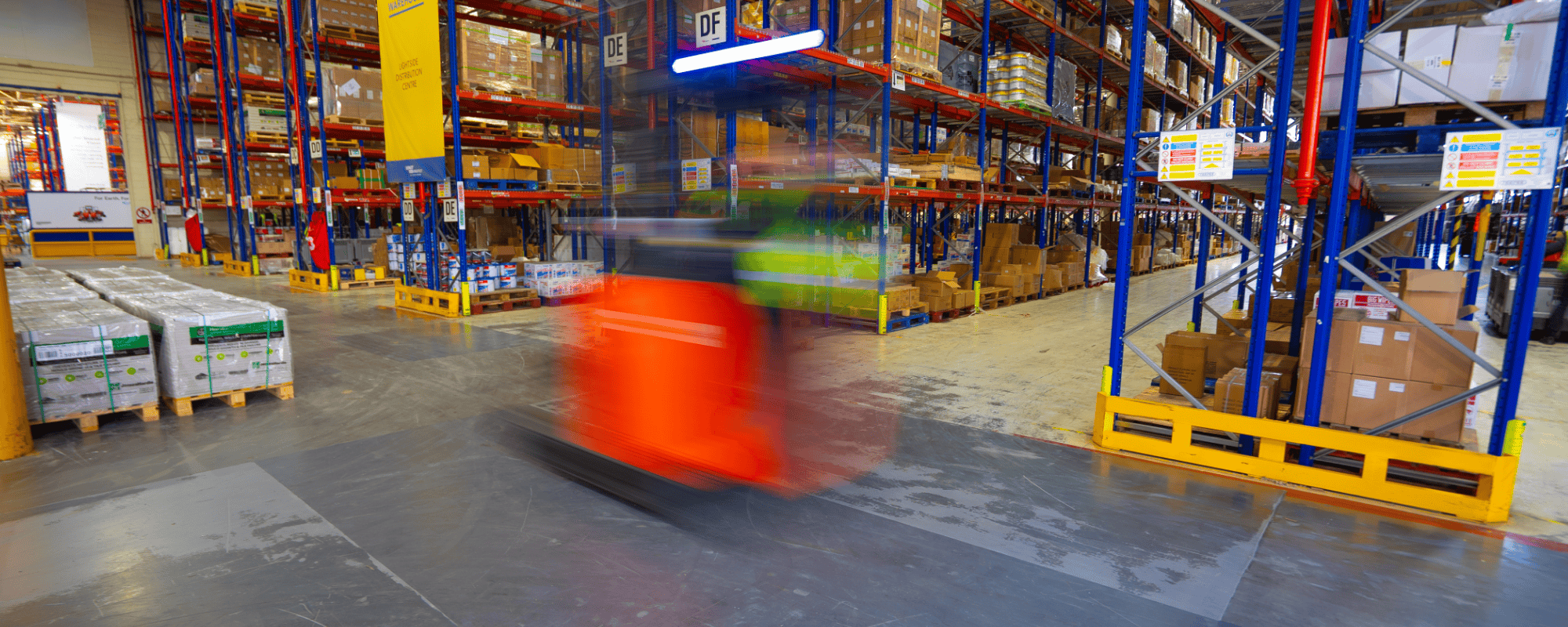
Because of this, we are witnessing a shift in warehousing where AI-driven sorting, AMRs, and real-time inventory tracking are becoming standard. These technologies are a direct response to modern consumer expectations for accuracy, speed, and reliability. By reducing human error in the final stages of the supply chain, businesses can lower return rates and strengthen long-term brand loyalty.
For many organisations – particularly SMEs – the challenge is not whether to adopt these technologies, but how to do so in a way that is scalable, affordable, and operationally sustainable.
As of 2024, the global warehouse automation market has surged to an estimated $26.5 billion, with projections suggesting it will exceed $115 billion by 2034 as businesses race to digitise. This investment in AMR is less about replacing manual labour and more about creating an intelligent, responsive ecosystem alongside humans.
In the UK, the push for automation is particularly urgent. However, where warehouse requirements are dominated by SMEs (roughly 85% of UK warehousing businesses), owing to budgets within these businesses, there has been a significant shift toward modular, scalable automation. This allows smaller operators to ‘build as they grow,’ adding robotic arms or AMRs incrementally rather than facing a massive upfront capital expenditure.
As a result, many organisations are adopting a phased approach to warehouse automation, enabling them to pilot solutions, prove value, and scale capability as performance gains are realised. This incremental model reduces operational risk, supports workforce adoption, and ensures automation investments remain aligned with business priorities.
Despite the need to incrementally implement, adoption of any form of automation in warehousing is high. In UK fulfilment centres, 45% of businesses had already implemented AI-powered automation by 2023, with that figure expected to hit 70% by 2027. And the results are tangible, showing that companies adopting these technologies report 99% inventory accuracy and up to a 200% increase in picking productivity.
Beyond speed and efficiency, automation also supports sustainability efforts in warehousing. In a survey of UK retail and e-commerce leaders, 88% agreed that warehouse automation is vital to supporting sustainability efforts via energy efficiency, reduced material waste, better space optimisation, and lower transport costs.
The shift in the UK’s warehousing landscape, from a 61% increase in footprint to the rapid upskilling of a 1.8-million-strong workforce, strongly suggests that a warehouse should now be seen as a differentiator within supply chain operations.
We are now seeing supply chain resilience tested daily, and we believe that businesses can no longer afford to treat warehousing as a back-end cost. To thrive, business leaders must transition from managing space to mastering a strategic asset.
At Unipart, we specialise in ensuring your warehouse operations translate into business growth. Our network of strategically located warehouses is built to provide the reach, technology, and precision required to future-proof your operations. If you are looking for a partner who understands that every second in the warehouse impacts your bottom line, we are here to help. To see how these sites can specifically optimise your distribution reach, you can download our full range of site-specific brochures.