Get in touch
To learn more about how Unipart is enhancing supply chain resilience for the defence sector, contact our experts today.


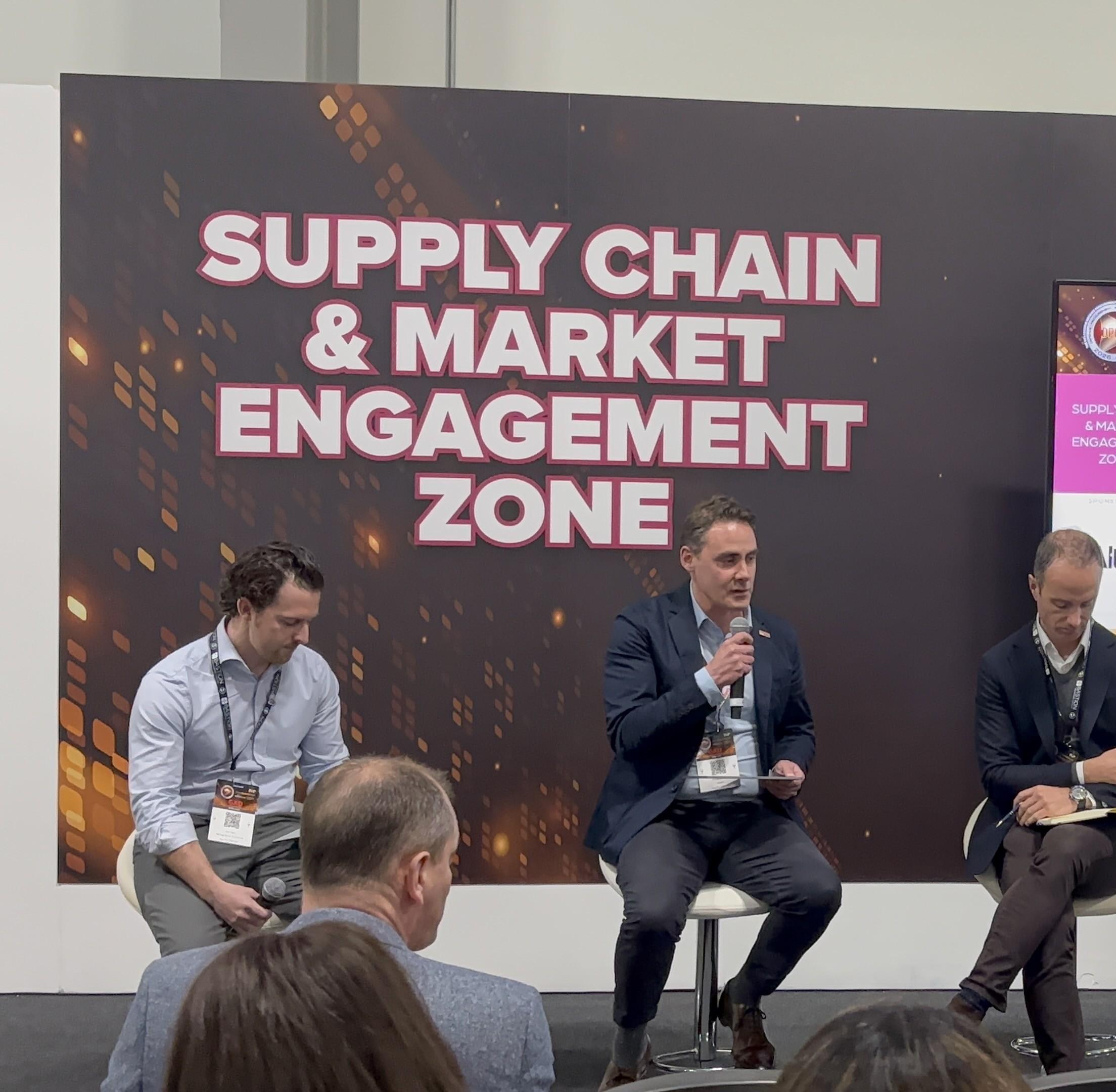
The recent DPRTE 2026 event arrived at a pivotal moment for the UK defence sector. With a clear steer from the Ministry of Defence (MoD) on the need for greater agility and readiness at pace, the focus has shifted toward how industry can better support the transition to a more resilient, sovereign supply chain.
To explore what this means in practice, Unipart’s Jim Hartshorne MD Commercial was joined on stage by Rob Kelly from KBR and Giles Hartwright from IBM.
The discussion centred on a shared challenge around how industry partners can collaborate to support the MOD’s transition to more resilient, war-footing readiness without losing operational stability.
The foundation of this transition is what Rob Kelly described as silent running. In a sector as critical as defence, there isn’t the luxury of downtime or poor transition during a digital or commercial overhaul.
As Rob noted: “It is of the utmost importance for us to ensure that the end-user has no idea that change has happened in the background… the soldier at the pointy end of all of those things is uninterrupted in his or her daily work.”
Success is measured by invisibility. Whether industry is updating a legacy system or shifting a supply chain methodology, the operator should experience total continuity even as the infrastructure behind them undergoes significant modernisation.
Achieving this level of seamless continuity, however, requires a deep-rooted approach to resilience.
During the panel, Jim pointed out that resilience is a practical discipline built on detailed supply chain mapping. “You can’t plan 100% of all the issues that are going to hit your supply chain, but you can make sure that everybody understands their role and how the systems hang together so that the energy goes into fixing the problem rather than understanding where you are in the first place.”
He cited Unipart’s recent experience navigating a client’s major automotive cyber-attack, where the business was back up and running within days. This wasn’t down to luck, but to upfront preparation, ensuring that when a shock hits, resources are focussed on fixing the problem rather than trying to understand the system from scratch.
This need for rapid response naturally leads to the requirement for better data. You cannot have true resilience if you are relying on static information or manual entry.
Giles emphasised that through programmes like DEEAMS, the goal is to provide a genuine decision advantage by making data live and integrated: “It’s no good in the current environment to have data that’s out of date…it needs to connect inventory, warehousing, operations and maintenance data to enable the decision maker or operator to make decisions in near real-time.”
This digital assurance also has a long-term horizon. With the NCSC guidance on Post Quantum Cryptography for critical national infrastructure to be quantum safe, the panel discussed the urgent need to protect encrypted data now against future decryption threats, a challenge that must be met by every tier of the supply chain.
Ultimately, the technology and systems are only as strong as the people and partners behind them. The session concluded by looking at the broader UK industrial ecosystem, noting that a truly resilient defence sector requires a commitment to UK prosperity and skills.
Whether it is Unipart’s work with Coventry University to bring postgraduate talent into real-world manufacturing projects, or KBR’s commitment to flowing 60% of profit back into the SME supply chain, the sovereign effort is about moving toward tight-cycle development, where developers and operators work side-by-side to deliver technology in weeks rather than years.
The overarching takeaway from our time at DPRTE is that the scale of the challenges facing the MOD means no single organisation can provide all the answers.
By moving away from purely transactional commercial relationships and toward a model where operational experience, commercial agility, and tech expertise overlap, we can provide the delivery confidence the UK requires.
We would like to thank our partners at KBR and IBM for a fantastic session, and all the attendees who contributed to such a vital conversation on the future of UK defence at DPRTE.