

Safety-critical logistics at national scale
24th August 2026 | 3 min read

The Challenge
Operating a national, safety-critical logistics network requires an uncompromising focus on safety, absolute inventory accuracy, and constant service availability. During Unipart’s time as the core logistics partner for a national healthcare provider’s supply chain, we were managing a highly complex, multi-site network of eight regional distribution centres (RDCs), including a national distribution centre (NDC), and serving approximately 18,000 healthcare locations.
The day-to-day operational baseline included managing 495,000 annual deliveries and coordinating order fulfilment for 900 suppliers, alongside operating high-utilisation storage for regulated, temperature-sensitive, and safety-critical inventory under strict GDP (Good Distribution Practice) and MHRA (Medicines and Healthcare products Regulatory Agency) oversight.
The ultimate test of this infrastructure came during the Covid pandemic, when overall throughput demand spiked by 47% and personal protective equipment (PPE) volumes surged by 145% overnight. Unipart had to rapidly scale storage, mobilise resources, and expand logistics loops without compromising regulatory compliance, inventory control, or delivery accuracy.
The Solution
Unipart met this challenge by using our established, system-driven warehousing processes, highly structured subcontractor governance, and a rigorous business continuity planning (BCP) framework.
System-driven warehousing
Unipart’s operations were anchored in standardised, WMS-driven (Warehouse Management System) processes that ensured complete inventory visibility and compliance:
- Capturing batch, lot, expiry date, and regulatory status at goods-in, with system-directed put-away into temperature-controlled, quarantine, and COSHH-segregated storage.
- Controlling life-limited stock through strict rotation, quarantine, and disposal rules, supported by a perpetual-inventory regime with regular cycle counts and full audit trails.
- Restructuring fulfilment around four overnight picking waves to secure next-day availability, verified at every stage by barcode scanning and system checks.
Rapid capacity and infrastructure scaling
On activating our formal business continuity framework, Unipart achieved rapid scaling:
- Sourced, secured, and opened 21 overflow warehouses in under four weeks per site, rapidly generating 70,000 additional pallet spaces integrated directly into the core WMS as sub-depots with daily stock audits.
- Mobilised 450 additional warehouse staff, 40 redeployed managers, and 27 additional vehicles under a unified safety protocol.
- Integrated parcel carrier networks to safely bypass traditional bottlenecks and reach an additional 19,000 GP and pharmacy locations.
Integrated subcontractor governance
To maintain operational integrity during the scale-up, Unipart managed agency labour and transport subcontractors under a single, accountable standard:
- Subcontractors were vetted under rigorous procurement standards and held to identical ISO 9001-accredited safety and performance benchmarks.
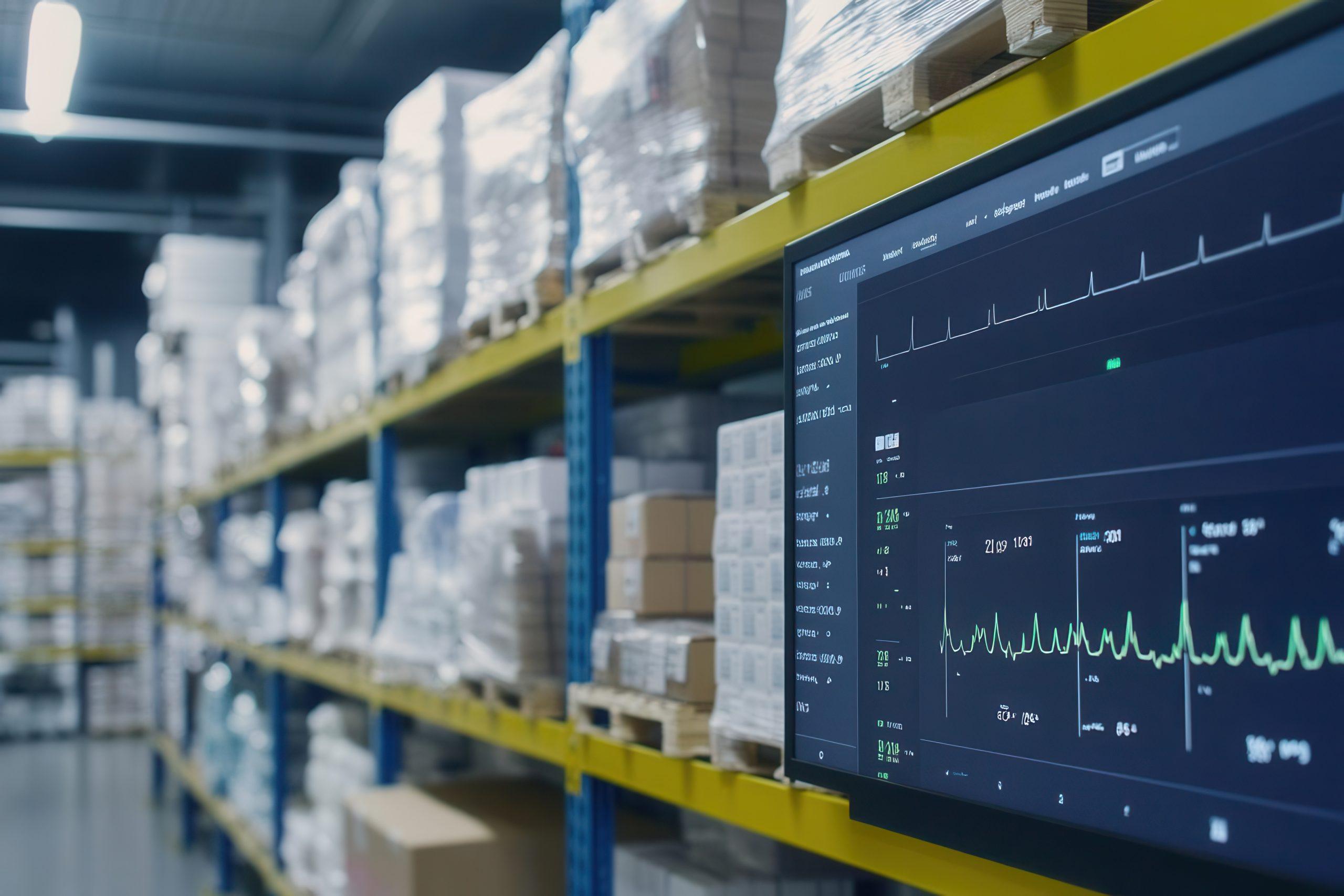
- Integrated KPI dashboards, shared standard operating procedures (SOPs), and mandatory joint training ensured subcontractor operations were completely indistinguishable from Unipart’s core operations.

The Impact
By combining rigid system discipline with rapid scaling capabilities, Unipart protected the supply chain during its most critical period, setting a benchmark for public sector logistics:
- Maintained 99% delivery accuracy on critical lines despite extreme volume volatility, ensuring safety-critical materials arrived on time and fully compliant.
- Successfully managed complex reverse flows for high-volume returns of capital and regulated stock, alongside the retrieval and tracking of delivery media (cages and totes).
- Executed a structured, two-year scale-down. Overflow sites were progressively closed, staffing levels right-sized, and residual materials safely absorbed back into the business-as-usual (BAU) network, protecting public resources and minimising write-offs.
This long-term contract proved that Unipart’s standardised warehousing systems, strict compliance culture, and robust subcontractor management can reliably safeguard critical national infrastructure through both daily operations and major systemic shocks.